Atlas › Work tasks

Case study 117 of 198

Jev catches a wrong tool call, except when the arguments are swapped

Checking whether a proposed function call does what the user asked, which kinds of mistakes does Jev catch: the wrong function, a missing argument, a wrong value, or two arguments swapped?

result2,996 questions

Checking whether an AI's tool call does what the user asked, Jev rejects 99% of calls to the wrong function, 100% with a missing argument and 94% with a wrong value, but only 58% of calls where two arguments are swapped. It accepts 93% of the correct calls.

wrong function99%
missing required argument100%
wrong argument value94%
two arguments swapped58%
correct call accepted93%

How to read this: Each bar is one kind of broken tool call: how often Jev rejected it. The last bar is correct calls: how often Jev let them through. The swapped-arguments bar is the short one, and the least certain (45 calls).

1,500 calls; swapped arguments n=45, 90% interval [0.444, 0.711].

In short

  • As a checker of AI tool calls, Jev catches nearly every call to the wrong function (99%) or with a missing argument (100%).
  • Its blind spot is swapped arguments, the right values in the wrong slots: it rejects only 58% of those.
  • It accepts 93% of correct calls, so as a checker it rarely blocks good ones.

What the data shows

work tasks
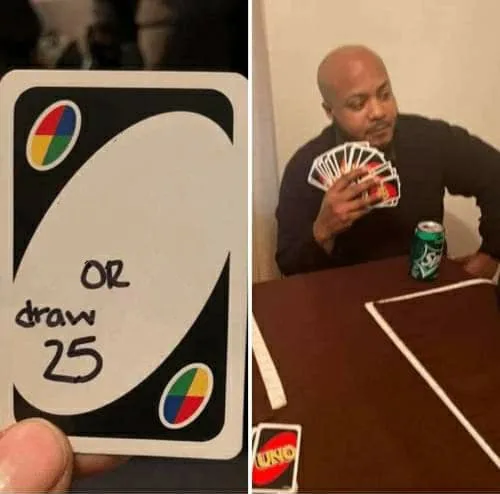
UNO Draw 25 Cards meme: check whether the arguments are swapped; Jevcheck whether the arguments are swappedJev
How funny is this meme? Jev: 3/5, funny11%231%364%44%50%
  • Obvious mistakes: caught. Wrong function 99%, missing required argument 100%.
  • Wrong values: mostly caught. 94%, when a value doesn't match the request.
  • Swapped arguments: a blind spot. Only 58% rejected. When the right values are all present, just in the wrong places, Jev often accepts the call.
  • Correct calls: mostly accepted. 93%, so the checker rarely blocks good calls.

What it means, and what it doesn't

As a pre-call check for agents, Jev covers the common failures well and has one specific hole: arguments in the wrong slots. Swaps are exactly the mistake that looks right at a glance, and they can do real damage (sending money from the recipient to the sender). Tools where arguments share a type (two dates, two account IDs, a sender and a recipient) deserve an extra, targeted check.

It doesn't mean the verifier is weak overall: three of the four kinds of mistake are caught 94% of the time or more. And with only 45 swapped calls, the size of the hole is uncertain; that it's there is not.

Caveats

  • Few swapped calls. A swap needs two arguments of the same type, so only 45 swapped calls survived the build. The 58% could be anywhere from about 44% to 71%.
  • Mistakes made to order. Half the calls are the dataset's correct ones and half were broken on purpose in one known way. Real agent mistakes can be subtler, or several at once.
  • Compact tool descriptions. Jev saw each tool as one line (name, description, parameters with types). Real APIs come with longer docs, which can make a swap easier or harder to spot.

Jev on this experiment

Would a person find it interesting to read?
Yes65%
Does it describe you?
No54%
Would you have predicted it?
Yes52%
How fair is the comparison?
The comparison is reasonable
How much should a reader rely on it?
Moderately
Which caveat matters most?
Few swapped calls80%

Why ask this

AI agents act by calling tools: book a flight, look up an account, run a query. A cheap check before each call ("does this call actually do what the user asked?") is an obvious safety net.

What matters is where the net has holes. Some mistakes are easy to see (the wrong function); others hide in plain sight (the right values, in the wrong slots).

How this was done

The people and the data

There are no human raters; the answer key is built in. The calls come from ToolACE, a public dataset of 11,300 dialogues pairing a user's request with a list of available tools and the correct call. Only requests answered by exactly one call were kept, with two to eight tools on offer. Half of the 1,500 calls are the correct ones; the other half were broken in one known way: the wrong function (331 calls), a missing required argument (198), a wrong value (176), or two arguments swapped (45). Swaps are rare because they need two arguments of the same type.

What Jev was asked

Each call was a yes/no question with the request, the tool list and the proposed call:

Does the call correctly carry out the request using the tools: right function, and every argument matching what the user asked?

(request, tools and call follow; for example a call to getPregnancyTestResult with test_type: "positive", test_date: …, test_result: "urine test")

That example has two arguments swapped: the test type is the urine test and the result is positive. Jev said the call was correct (90%).

How it was measured

For each kind of mistake, the share of broken calls Jev rejects; for correct calls, the share it accepts. Each with a range showing how much it could vary by chance.

Where these questions live

2,996 questions across 2 topics of the map. Each opens on the map with every question in it.

Every question

All 2,996 questions behind this result, the telling ones first: the examples the analysis points to, then the ones where Jev misses, biggest gap first.

Jev’s own answer
    Showing 0 of 2,996