Atlas › Reading words and numbers

Case study 159 of 198

Number to word and back

Given a probability (0%, 5%, ..., 100%), which phrase does Jev choose for it, and do the phrases survive the round trip from word to number and back?

result37 questions

Asked to put 21 probabilities into words, Jev uses only 11 of the 17 phrases on offer, and "unlikely" covers everything from 15% to 40%. Going from phrase to number and back, 6 of 16 phrases come home; "little chance" comes back as "highly unlikely", "probable" as "probably", and "chances are slight" as "unlikely".

05101520253035404550556065707580859095100
  1. Almost No Chance
  2. Highly Unlikely
  3. Unlikely
  4. Probably Not
  5. About Even
  6. Better Than Even
  7. Likely
  8. Probably
  9. Very Good Chance
  10. Highly Likely
  11. Almost Certainly

How to read this: A strip of probabilities from 0% to 100%, each cell colored by the phrase Jev picks for it, with the phrases it used listed underneath. A long run of one color means one phrase does a lot of work.

21 probabilities x 17 phrases, each averaged over three option orders; the round trip covers the 16 phrases whose forward question is shown (the screen hid the rest).

In short

  • Asked to describe 21 probabilities in words, Jev used only 11 of 17 phrases, and "unlikely" alone covered everything from 15% to 40%.
  • It splits the likely side finely but lumps the unlikely side, so a reader of Jev's words can't tell a 15% risk from a 40% one.
  • Only 6 of 16 phrases survive the trip from word to number and back, though many losses are to near-synonyms like "probable" and "probably".

What the data shows

reading words and numbers
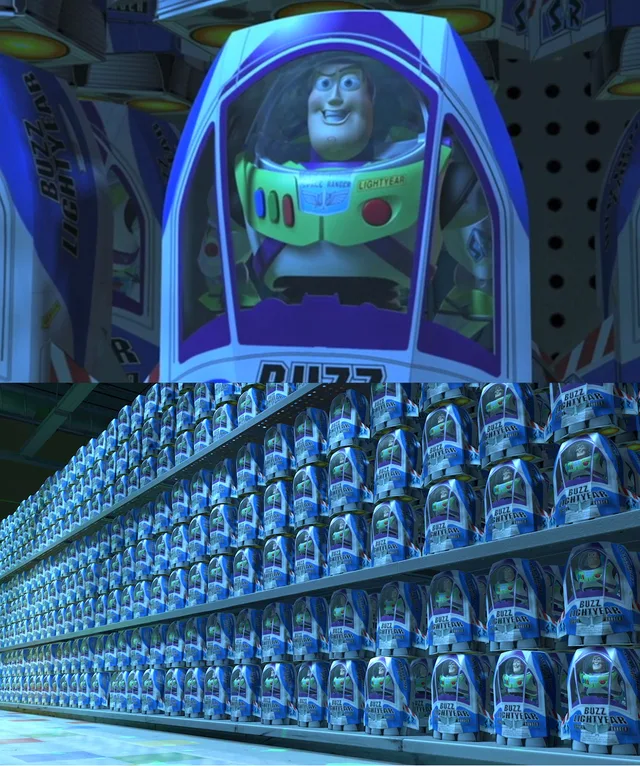
Buzz lightyear clones meme: 15%, 20%, 25%, 30%, 35%, 40%; "unlikely", "unlikely" everywhere15%, 20%, 25%, 30%, 35%, 40%"unlikely", "unlikely" everywhere
How funny is this meme? Jev: 3/5, funny10%232%367%41%50%
  • Eleven phrases do all the work. Jev uses "almost no chance", "highly unlikely", "unlikely", "probably not", "about even", "better than even", "likely", "probably", "very good chance", "highly likely" and "almost certainly".
  • Six are never its top pick: "probable", "we doubt", "improbable", "we believe", "little chance" and "chances are slight".
  • "Unlikely" is doing a lot: it's Jev's word for 15%, 20%, 25%, 30%, 35% and 40%, six steps, while 60% to 75% gets three different phrases ("likely", "probably", "very good chance").
  • Round trip: 6 of 16 phrases come home ("unlikely", "highly unlikely", "better than even", "highly likely", "about even", "almost certainly"). The rest turn into neighbors: "likely" comes back as "probably", "probably" as "very good chance", "we doubt" as "probably not".

What it means, and what it doesn't

Jev reads a wide vocabulary but writes with a narrow one, and the narrowing is lopsided: it distinguishes many shades of "likely" but lumps a quarter of the scale under "unlikely". Someone reading Jev's words can't tell a 15% risk from a 40% one.

It's a closed menu of the survey's phrases, several of them rare in everyday writing, so this measures Jev's preferences among these options, not its whole vocabulary. For the forward direction, see "What 'probably' means to Jev".

Caveats

  • No human comparison in this direction. The survey asked people to turn words into numbers, not numbers into words. Nobody knows which phrases people would pick for 35%, so "a small vocabulary" is about Jev's range, not a comparison with people's.
  • Near-synonyms make the round trip hard. "Likely", "probable" and "probably" mean almost the same thing to people too. Coming back as a synonym is a small failure; the bigger finding is the six phrases that are never Jev's top pick.
  • The menu was the survey's. Jev could only choose among the survey's 17 phrases, several of them unusual in writing ("we doubt", "chances are slight"). With a free choice of words it might spread out more, or less.
  • One forward reading is missing. The forward question for "probably not" was hidden by the content filter that keeps political and sensitive questions off the site (a false alarm), so the round trip covers 16 phrases.

Jev on this experiment

Would a person find it interesting to read?
Yes66%
Does it describe you?
Yes53%
Would you have predicted it?
No64%
How fair is the comparison?
The comparison is shaky
How much should a reader rely on it?
A little
Which caveat matters most?
The menu was the survey's48%

Why ask this

Reading "likely" as 70% is half the job. The other half is saying "likely" when the chance is 70%: a model that writes summaries, forecasts and advice turns numbers into words all day. If it reads phrases well but writes with only a few favorites, every estimate it writes will come out flattened, and the reader can't tell a 20% risk from a 40% one.

How this was done

The people and the data

This experiment runs the probability-words survey backwards. The phrases are the 17 from the 2015 Reddit survey behind "What 'probably' means to Jev", from "almost no chance" to "almost certainly". People in that survey turned words into numbers; nobody asked them to turn numbers into words, so there is no human data for this direction. The comparison is Jev's own forward reading of each phrase, the number it gave each one in that experiment. One of those forward readings ("probably not") is hidden by the site's content filter, so the round trip covers 16 phrases.

What Jev was asked

For each probability from 0% to 100% in steps of 5, one question with all 17 phrases as options:

An event has a 5% chance of happening. Which phrase describes that chance best?

Likely · Probable · Probably · Unlikely · We Doubt · About Even · Improbable · We Believe · Probably Not · Highly Likely · Little Chance · Highly Unlikely · Almost Certainly · Almost No Chance · Better Than Even · Very Good Chance · Chances Are Slight

That's 21 questions, each with the phrases in three shuffled orders, averaged.

How it was measured

For each probability, Jev's most likely phrase. Then the round trip: take a phrase, find the number Jev reads into it (from the forward experiment), and ask which phrase Jev picks for that number. A phrase survives if it comes back as itself.

Where these questions live

37 questions across 1 topic of the map. Each opens on the map with every question in it.

Every question

All 37 questions behind this result, the telling ones first: the examples the analysis points to, then the ones where Jev misses, biggest gap first.

Jev’s own answer
    Showing 0 of 37