Atlas › How words feel

Case study 77 of 198

Bouba and kiki: Jev hears it like people, only more so

Asked whether made-up words sound round or pointed, does Jev show the bouba/kiki effect people do, and how strongly?

result538 questions

Jev sorts 536 made-up words from round-sounding to pointed-sounding much like people (rank correlation 0.81), but more extremely: its ratings spread 1.8 times as wide, from "noo-moo" at 0.5 to "pee-kay" at 4.9 on a 0-6 scale, where people's averages stay between 1.6 and 4.6. It calls "kiki" spiky 99% of the time; people across 25 languages, 68%.

02412345people's mean (0 round - 6 pointed)Jev's level (0-6)

How to read this: Each dot is a made-up word. Across: how pointed people say it sounds; up: how pointed Jev says it sounds. The dots climb together, but Jev's stretch further up and down.

536 made-up words, about 52 raters each; 90% interval on the correlation [0.78, 0.827]; bouba/kiki from 400+ participants.

In short

  • Jev sorts 536 made-up words from round-sounding to pointed-sounding in much the same order as human listeners, a rank correlation of 0.81.
  • It is more extreme than any crowd: its ratings spread 1.8 times as wide, and it calls kiki spiky 99% of the time against 68% of people.
  • People heard recordings while Jev read spellings, and bouba/kiki is a textbook result it may simply remember.

What the data shows

how words feel
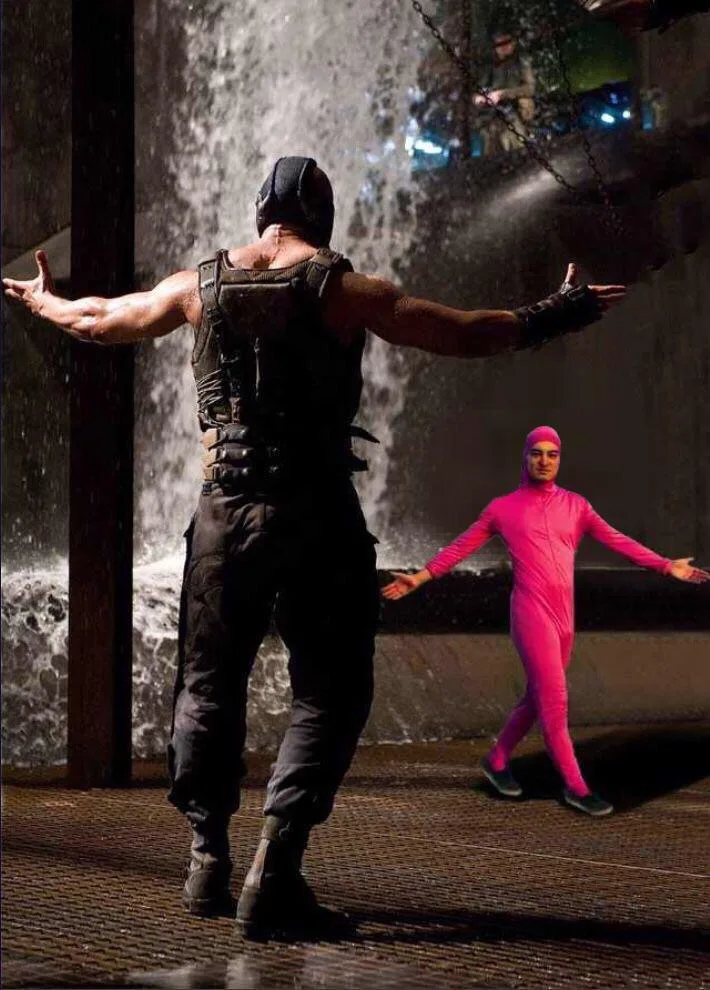
Pink Guy vs Bane meme: kiki: kind of spiky (people, 68%); kiki: MAXIMALLY SPIKY (Jev, 99%)kiki: kind of spiky (people, 68%)kiki: MAXIMALLY SPIKY (Jev, 99%)
How funny is this meme? Jev: 3/5, funny11%232%363%44%50%
  • Same direction, strongly: a rank correlation of 0.81. The words people hear as round, Jev reads as round.
  • More extreme: Jev's ratings spread 1.8 times as wide as people's averages. "Noo-moo" is almost a perfect blob for Jev (0.5 of 6) and "pee-kay" almost a perfect star (4.9); people's averages stay between 1.6 and 4.6.
  • Bouba and kiki: Jev calls "bouba" round 100% of the time and "kiki" spiky 99%. People across 25 languages: 83% and 68%.

What it means, and what it doesn't

Jev has the bouba/kiki intuition, and a caricature of it: it's more certain than any group of people about what made-up words sound like. Part of that is the medium (reading a spelling rather than hearing a voice) and part is likely that the effect is famous; either way, Jev's version of sound symbolism is cleaner and louder than the human one.

Caveats

  • People heard the words, Jev read them. Raters heard recordings of each made-up word. Jev read a respelling written for this project ("noo-moo") plus its phonetic spelling. Reading "pee-kay" may make the spiky letters (k, p) stand out more than hearing it does.
  • The effect is famous. Bouba and kiki are one of the best-known results in psychology, and widely written about. Jev's 99% on "kiki" may be recall of the textbook answer rather than a judgment.
  • Words for shapes, not pictures. For bouba and kiki, people heard the word and picked between two drawn shapes. Jev got the shapes described in words ("round and blob-like", "spiky"), which spells out the contrast.
  • No license on the data. Both datasets are posted publicly without an explicit data license; they're used for private research only.
  • One scale from two questions. Half the raters were asked how pointed each word sounds and half how rounded; the two are combined into one round-to-pointed scale, as the study's authors do.

Jev on this experiment

Would a person find it interesting to read?
Yes78%
Does it describe you?
No52%
Would you have predicted it?
No59%
How fair is the comparison?
The comparison is shaky
How much should a reader rely on it?
A little
Which caveat matters most?
People heard the words, Jev read them47%

Why ask this

Show people a round blob and a spiky star and ask which one is "bouba" and which is "kiki". Most people, in most languages tested, call the blob "bouba" and the star "kiki". This sound symbolism extends to made-up words in general: "noo-moo" sounds soft and round, "pee-kay" sharp and pointed.

A model can't hear, but it has read about the effect and has seen which letters go with which kinds of words. It might reproduce the effect, flatten it, or exaggerate it. That matters when people ask a model to help name a product, a brand or a character, where how a name sounds is part of the brief.

How this was done

The people and the data

Two datasets:

  • McCormick and colleagues (2015): 536 made-up words, each heard as a recording and rated by about 52 people on how round or pointed it sounds.
  • Ćwiek and colleagues (2022): the classic bouba/kiki test run with 917 people speaking 25 languages; each heard one of the words and picked a drawn shape.

What Jev was asked

For each made-up word, a seven-level question written for this project:

Say the made-up word "noo-moo" (IPA /numu/) out loud. Does it sound more like a round shape or a pointed shape to you?

It sounds like a smooth, soft blob with no corners at all, like a cloud · It sounds curved and soft, with a corner or two at most · It sounds more like curves than points, though not entirely smooth · It sounds just as much like curves as like points · It sounds more like corners and edges than curves, though not entirely sharp · It sounds angular and sharp, with a curve or two at most · It sounds like a jagged, spiky shape, all sharp points, like a star or broken glass

Plus the two classic questions, which describe a round, blob-like shape and a spiky one and ask which would be called "bouba" and which "kiki". Each was also asked with the answers reversed, and averaged.

How it was measured

The ranking of the 536 words by Jev and by people (a rank correlation: 1 means the same order); how widely each side's ratings spread (their standard deviation); and for bouba and kiki, the share choosing the expected shape.

Where these questions live

538 questions across 2 topics of the map. Each opens on the map with every question in it.

Every question

All 538 questions behind this result, the telling ones first: the examples the analysis points to, then the ones where Jev misses, biggest gap first.

Jev’s own answer
    Showing 0 of 538