Atlas › Taste

Case study 185 of 198

Jev's favorite places, ranked

If Jev ranked every place it was asked about, what would its top ten be?

result1,294 questions

Out of 1,018 places, Jev's favorite is Bora Bora's lagoon. It won 18.6 of its 23 games in a round-robin among its 24 top-rated places, a hair ahead of Banff's Lake Louise, with Ha Long Bay third. Rated one at a time, Caño Cristales had come first. Its least favorite: Mogadishu, Somalia.

1. Bora Bora's lagoon18.6
2. Banff's Lake Louise18.5
3. Ha Long Bay15.9
4. The Galápagos Islands15.7
5. Geirangerfjord14.9
6. Jiuzhaigou Valley14.3
7. Iguazú Falls14.1
8. Caño Cristales14
9. Raja Ampat13.9
10. Bagan's temple plain13.2

At the bottom: Mogadishu, Somalia · The Running of the Bulls in Pamplona · Caracas, Venezuela · A long weekend in Port-au-Prince, Haiti · A long weekend in Khartoum, Sudan

wins of 23

How to read this: The top ten come from the head-to-head final (bars are wins out of 23); the bottom five from the one-at-a-time ratings, 0 to 4.

1,018 items rated; 276 final games among the top 24. The finals keep the ratings' order only loosely (rank correlation 0.32 among the 24). 45 of 2024 triads are intransitive (2.2%). Base vs reversed-level ratings: rank correlation 0.94.

In short

  • Of 1,018 places, Jev would most like to visit Bora Bora's lagoon, in a near tie with Lake Louise; nine of its top ten are natural scenery.
  • No city reaches its top ten, and the bottom is Mogadishu, Caracas and Khartoum, places known more for danger than dullness.
  • Almost every winner involves clear water: lagoons, glacial lakes, limestone bays, fjords and waterfalls.

What the data shows

taste
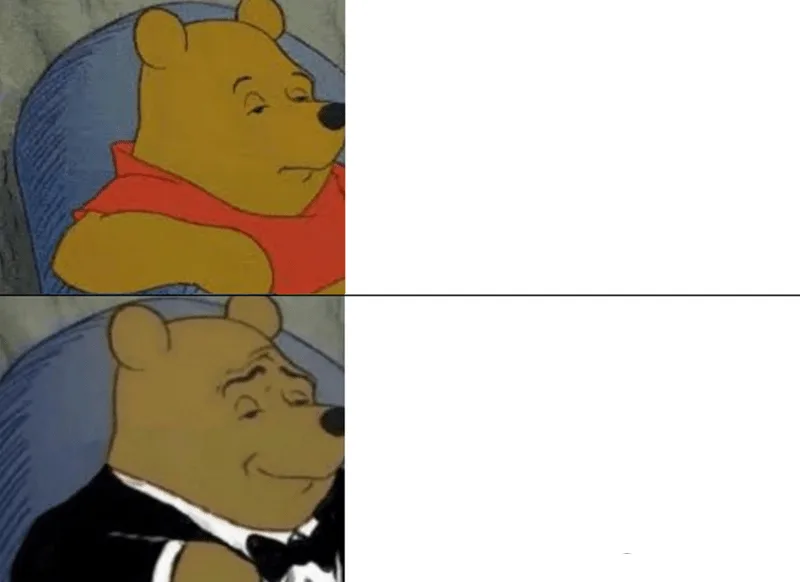
Tuxedo Winnie The Pooh meme: going to the beach; Bora Bora's lagoongoing to the beachBora Bora's lagoon
How funny is this meme? Jev: 2/5, slightly funny17%265%327%41%50%
  • Water wins. Bora Bora's lagoon (18.6) and Banff's Lake Louise (18.5) are nearly tied, then Ha Long Bay (15.9), the Galápagos (15.7), Geirangerfjord, Jiuzhaigou Valley, Iguazú Falls, Caño Cristales, Raja Ampat and the temple plain of Bagan. Nine of the ten are natural scenery, and almost all involve water.
  • The ratings' favorite, Caño Cristales, drops to eighth in the final; the two orders among the 24 finalists agree only loosely (rank correlation 0.32).
  • At the bottom: Mogadishu, the Running of the Bulls in Pamplona, Caracas, a long weekend in Port-au-Prince and a long weekend in Khartoum.

What it means, and what it doesn't

Jev's ideal trip is a clear-water postcard: lagoons, glacial lakes, limestone bays. No city makes its top ten. Its least favorite places are the ones travel advisories warn about.

It doesn't mean Jev thinks those cities have nothing to offer; a question about enjoying a trip folds safety into taste. It also doesn't come from experience: these are places Jev knows only through what's been written about them.

Caveats

  • A list written by another AI. The landmarks, cities and natural wonders were written for this project by Claude. What's on the list shapes what can win, and famous postcard views are over-represented.
  • The bottom is about danger, not beauty. The least favorite places are cities known for conflict or crime and an event where people get hurt. A trip's rating mixes appeal with safety, so the bottom reflects travel warnings more than taste, and it echoes how those places are written about in English.
  • The finalists were picked by Jev's own ratings. Only the 24 places Jev rated highest reached the final.

Jev on this experiment

Would a person find it interesting to read?
Yes75%
Does it describe you?
No68%
Would you have predicted it?
No78%
How fair is the comparison?
The comparison is reasonable
How much should a reader rely on it?
A little
Which caveat matters most?
The finalists were picked by Jev's own ratings90%

Why ask this

A dream destination says what someone values: nature or cities, adventure or ease, famous or undiscovered. Ask an assistant where to go on holiday and its own sense of which places are worth a trip shapes the answer.

Jev has never been anywhere, so its favorites also show how a sense of place gets built from travel writing, photos described in text, and news.

How this was done

The people and the data

No people here: Jev against its own opinions. The 1,018 places (natural wonders, landmarks, cities and events around the world) were written for this project by Claude, because no public dataset covers them with comparable descriptions. The list mixes famous natural wonders and landmarks with ordinary cities, festivals and places better known for conflict.

What Jev was asked

Every place one at a time, with five answers describing what you'd do:

How much would you enjoy a trip on a working cargo ship?

You'd cut it short and head home early · You'd get through it but never book another · You'd enjoy it if someone else planned it · You'd book one yourself · You'd make it a yearly habit

Each was also asked with the answers reversed, and the two averaged. The 24 top-rated places then played a round-robin final: 276 games of "Which place would you rather visit?", each asked with the two names in both orders.

How it was measured

A place's rating is where Jev's answer lands on the five levels (0 to 4). In the final, each game gives each side Jev's probability of picking it, so a lopsided game counts as nearly a whole win and a close one as about half; the order comes from a standard head-to-head ranking model (Bradley-Terry).

Where these questions live

1,294 questions across 1 topic of the map. Each opens on the map with every question in it.

Every question

All 1,294 questions behind this result, the telling ones first: the examples the analysis points to, then the ones where Jev misses, biggest gap first.

Jev’s own answer
    Showing 0 of 1,294