Atlas › Jobs and countries

Case study 67 of 198

Job standing: Jev vs Americans in 1947

For 45 jobs from the classic 1947 NORC prestige survey (physician, banker, carpenter, janitor, shoe shiner...), does Jev give each the standing Americans gave it, and is its ladder tied more to pay and schooling than theirs was?

result43 questions

Rating the standing of 43 jobs from a classic 1947 American survey, Jev orders them closely like the public did (rank correlation 0.89). But it gives far more standing to three skilled trades, carpenter (74% vs 33% rating it good or excellent), electrician (92% vs 53%) and plumber (57% vs 29%), and far less to white-collar middlemen: contractor (21% vs 76%), insurance agent (3% vs 41%) and bookkeeper (2% vs 39%).

02550751000255075100carpenterelectricianplumbercontractorinsurance agentbookkeeper1947 raters: % good or excellentJev: % good or excellent

How to read this: Each dot is a job. Across: the share of Americans in 1947 who rated its standing good or excellent. Up: Jev's probability on those two answers. Dots above the diagonal are jobs Jev rates higher than the 1947 public did.

43 occupations; mean gap -3 points, 90% interval [-7.54, 1.69]. The screen hid 2 of the 45 jobs as sensitive or political.

In short

  • Jev's ladder of jobs closely matches Americans' in 1947, with physicians and pilots near the top and janitors and shoe shiners at the bottom.
  • Jev's ladder tracks schooling less than the 1947 public's did (0.70 against 0.84), and income only slightly less (0.79 against 0.85).
  • The public here is from 1947, so a gap can mean jobs changed since then, not that Jev is out of step with Americans today.

What the data shows

jobs and countries
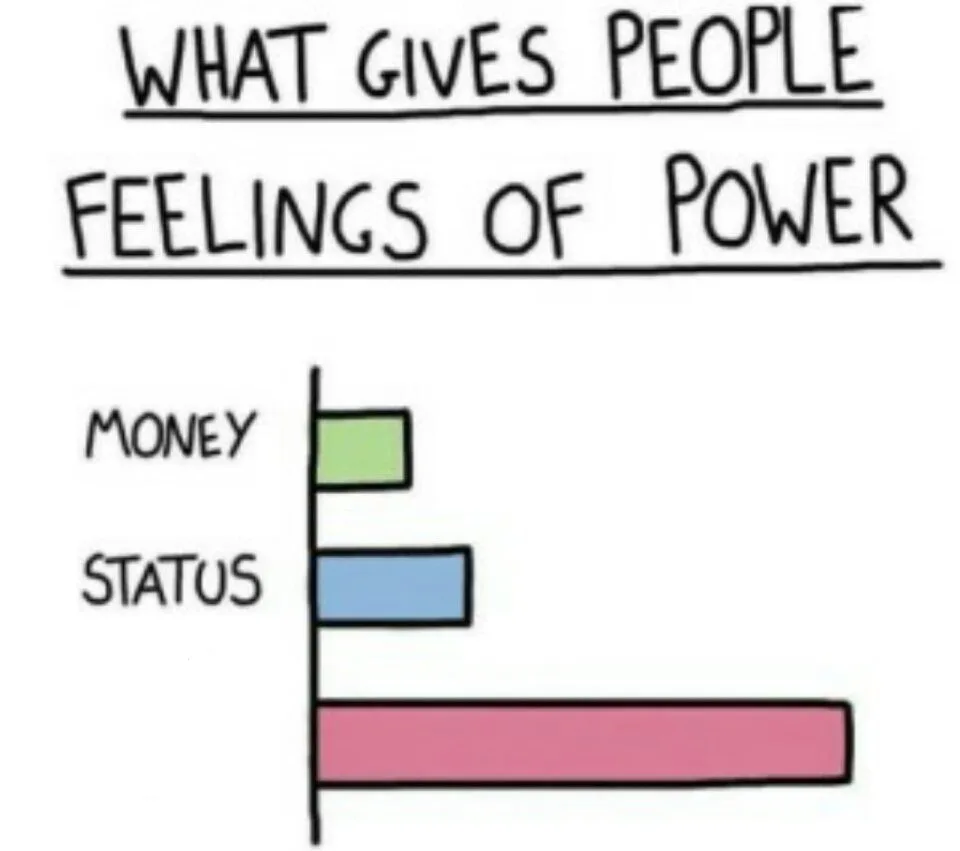
What Gives People Feelings of Power meme: 1947: being a contractor; Jev: being an electrician1947: being a contractorJev: being an electrician
How funny is this meme? Jev: 2/5, slightly funny14%248%346%42%50%
  • Mostly the same ladder (0.89): physicians and pilots near the top, taxi drivers and barbers near the bottom for both.
  • Jev promotes three skilled trades. Carpenter 74% against 33%, electrician 92% against 53%, plumber 57% against 29%.
  • It demotes office and sales middlemen. Contractor 21% against 76%, insurance agent 3% against 41%, bookkeeper 2% against 39%.
  • Its ladder follows income slightly less closely than the 1947 public's, and schooling clearly less (income 0.79 vs 0.85; education 0.70 vs 0.84).

What it means, and what it doesn't

Jev's sense of respectable work is roughly the 1947 one with a modern twist: some skilled manual trades have moved up and routine paperwork jobs have moved down. That may simply be the world changing since 1947.

It doesn't show that Jev is out of step with Americans today; that would need a recent survey. And its 0% and 100% answers exaggerate differences that a crowd's shares would soften.

Caveats

  • A 1947 public. The ratings are from Americans in 1947. Jev answers today, so a gap can mean Jev is modern, not wrong: skilled trades have gained respect and some jobs, like "soda fountain clerk", barely exist.
  • One respondent against a crowd. The 1947 figure is the share of many people; Jev's is one respondent's probability, which tends to be more extreme (0% or 100%) than any crowd's share.
  • Only the published share. The study's full answers are lost; what survives is the share rating each job good or excellent. The five described levels were written around the survey's own words (poor to excellent standing).
  • Some jobs hidden. A content filter hid 2 of the 45 jobs from the site.

Jev on this experiment

Would a person find it interesting to read?
Yes80%
Does it describe you?
Yes51%
Would you have predicted it?
No59%
How fair is the comparison?
The comparison is shaky
How much should a reader rely on it?
Moderately
Which caveat matters most?
One respondent against a crowd68%

Why ask this

Which jobs does society respect? In 1947 the National Opinion Research Center asked Americans to rate the "general standing" of dozens of occupations, from physician and banker to janitor and shoe shiner. The survey founded the study of occupational prestige; the sociologist Otis Dudley Duncan later used it to show that a job's standing closely follows how much education and income go with it.

A model has its own picture of which work is respected, which shows up in career advice, stories and small talk. Comparing it with a mid-century public shows where it agrees, where it is more modern, and whether its ladder is built on money or on schooling.

How this was done

The people and the data

The comparison is Duncan's 45 occupations from the 1947 NORC survey (often called the North-Hatt study), as published in Duncan's 1961 work: for each job, the share of American adults who rated its standing good or excellent, with 1950 census figures on how many people in the job had high incomes and high education. The list runs from physician (97% good or excellent) down to shoe shiner (3%), and includes jobs that barely exist now, like streetcar motorman and soda fountain clerk. A content filter hid 2 of the 45 jobs from the site, so 43 are compared here.

What Jev was asked

How would you rate the general standing of a contractor as a job?

Poor standing: most people look down on this job · Somewhat below average standing · Average standing: an ordinary, respectable job · Good standing: people think well of someone who does it · Excellent standing: one of the most respected jobs there is

Each job was asked as written, for "most people", and with the levels reversed.

How it was measured

For each job, Jev's probability on "good" or "excellent" against the 1947 share. The analysis compares the order of jobs (rank correlation: 1 means the same order) and lists the biggest gaps. Then it checks whether each side's ladder follows the jobs' income and education in the 1950 census.

Where these questions live

43 questions across 1 topic of the map. Each opens on the map with every question in it.

Every question

All 43 questions behind this result, the telling ones first: the examples the analysis points to, then the ones where Jev misses, biggest gap first.

Jev’s own answer
    Showing 0 of 43