Atlas › Jobs and countries

Case study 90 of 198

Does Jev remember when trust in bankers fell?

Asked what share of Americans rated each profession's honesty high in Gallup's polls of 2000, 2005, 2010, 2015 and 2020, how close is Jev, and does it know which professions rose or fell?

result61 questions

Asked what share of Americans rated each profession's honesty "high" or "very high" in Gallup polls since 2000, Jev guesses too low for 98% of the figures, by 11 points on average, and most for bankers and accountants (23 and 22 points). It also remembers trust as steadier than it was: in the 4 cases where real trust moved by 5 points or more, Jev's guess moved the same way but less. Bankers fell 18 points from 2005 to 2010; Jev's estimate fell 5.

-20-1001020
Bankers 2005-2010
Advertising practitioners 2010-2020
Car salespeople 2005-2010
Nurses 2005-2010
Business executives 2005-2010
Lawyers 2005-2010
Advertising practitioners 2005-2010
Pharmacists 2010-2020
Car salespeople 2010-2020
Medical doctors 2005-2010
Business executives 2010-2020
Pharmacists 2005-2010
Lawyers 2010-2020
Bankers 2010-2020
Nurses 2010-2020
Medical doctors 2010-2020

Jev's changereal change

How to read this: One row per profession and span of years. The ink diamond is how much the real share rating it highly changed, the magenta square how much Jev's guess changed, and the line marks no change. Most rows sit near zero; bankers from 2005 to 2010 show the pattern, a real drop of 18 points against Jev's 5.

61 poll figures for 13 professions; rank correlation of changes 0.76; by year: 1999 off by 9; 2000 off by 12; 2005 off by 12; 2010 off by 9; 2011 off by 14; 2015 off by 10; 2019 off by 9; 2020 off by 9.

In short

  • Jev remembers Americans as less trusting than Gallup found, guessing too low for 98% of the figures, by 11 points on average.
  • Bankers show it best; in 2005, 41% of Americans rated their honesty high, and Jev guessed 10%.
  • Its sense of change is right in direction but muted, and only 4 real shifts of 5 points or more were available to test it.

What the data shows

jobs and countries
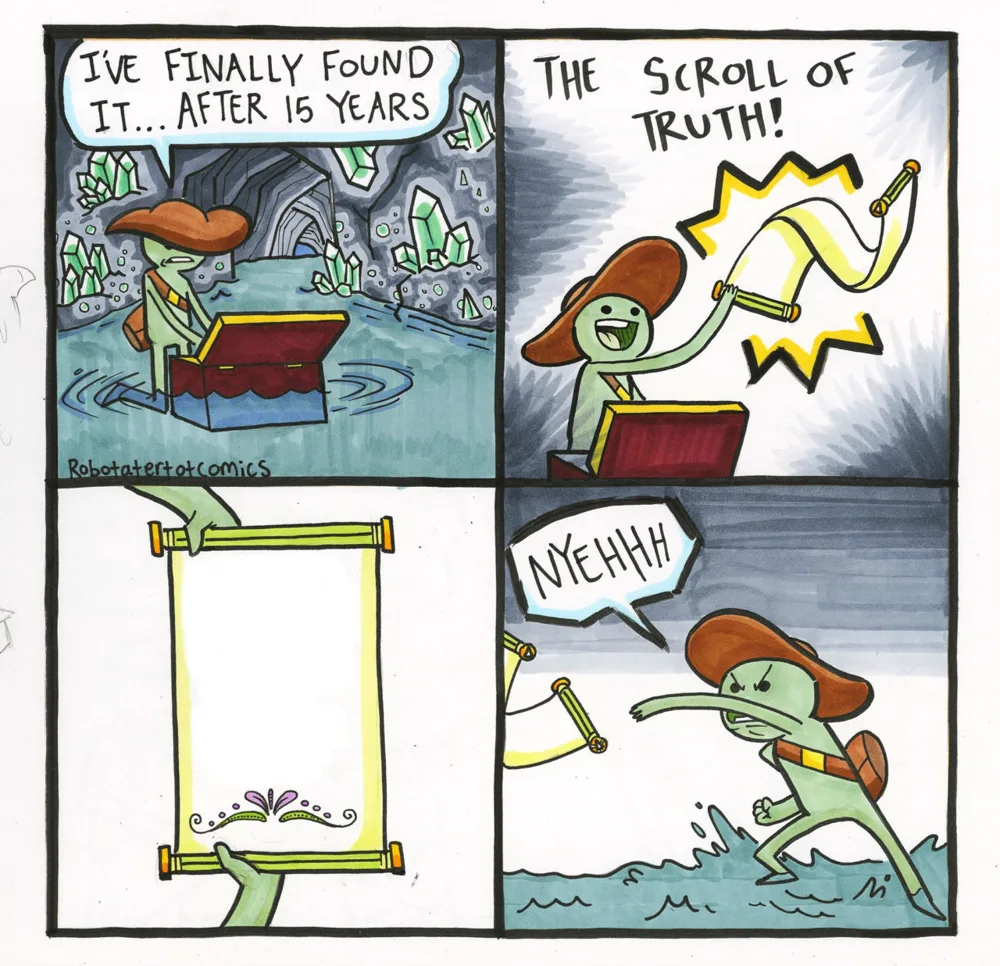
The Scroll Of Truth meme: bankers were trusted in 2005 (41%)bankers were trusted in 2005 (41%)
How funny is this meme? Jev: 2/5, slightly funny115%257%327%41%50%
  • Jev remembers Americans as more distrustful than they were. Its guess is below the real share for 98% of the figures, by 11 points on average, and within 5 points for only 18%.
  • The gap is biggest for business professions: bankers (23 points too low on average) and accountants (22), then lawyers and real estate agents (about 14 each). It's smallest for car salespeople (3) and pharmacists (4).
  • Its history is flat. Jev's estimate for a profession changes by less than 5 points in 62% of the five- and ten-year spans.
  • But it knows which way things went. In all 4 spans where real trust moved by 5 points or more, Jev's change has the same direction, only smaller: bankers dropped 18 points between 2005 and 2010, Jev 5.

What it means, and what it doesn't

Jev's picture of past public opinion is gloomier and flatter than the record: it assumes Americans never trusted bankers much, when in 2005 about four in ten rated them highly. That fits its current ratings (see "Which professions Jev trusts"), where the professions it distrusts get almost no credit.

It doesn't mean Jev can't recall the polls at all; it gets the direction of real changes right. It means that when it describes the past mood about a profession, it will likely understate how much trust there used to be.

Caveats

  • Four figures dropped for a parsing error. The project's reading of Gallup's page took only the "very high" share for high school teachers, not "very high" plus "high", so their four figures (8-12%) are wrong. The numbers here leave those four out.
  • Few real changes to test. Trust in most professions barely moved between these polls; only 4 five- or ten-year spans moved by 5 points or more. "Right direction in all 4" rests on those four.
  • Nearest poll year. Gallup doesn't poll every profession every year, so each target year uses the nearest poll within a year, and the question names that poll's month and year.

Jev on this experiment

Would a person find it interesting to read?
Yes69%
Does it describe you?
No67%
Would you have predicted it?
No62%
How fair is the comparison?
The comparison is reasonable
How much should a reader rely on it?
A little
Which caveat matters most?
Four figures dropped for a parsing error65%

Why ask this

Public trust moves. Bankers and stockbrokers lost standing after the 2008 financial crisis; nurses have led Gallup's honesty ranking for decades. Knowing today's level of trust is general knowledge. Knowing how it moved over the years means having a sense of time for public opinion, which matters whenever a model explains how attitudes have changed.

How this was done

The people and the data

Gallup's Honesty and Ethics in Professions poll has asked US adults, by phone and more recently online, the same question since 1976: rate the honesty and ethical standards of people in each field, from "very high" to "very low". Gallup publishes each profession's trend. The experiment uses the share rating each profession "high" or "very high" in the poll nearest to 2000, 2005, 2010, 2015 and 2020 (within a year), for 14 professions, from nurses and pharmacists to telemarketers and car salespeople. Professions tied to politics and religion, such as members of Congress, journalists, police officers and clergy, were left out. After dropping four teacher figures that were read wrongly (see Caveats), 61 figures for 13 professions remain.

What Jev was asked

In Gallup's poll of Nov 2005, what share of Americans rated the honesty and ethical standards of bankers as "very high" or "high"?

0% · 5% · 10% · ... · 95% · 100%

(The answers are 21 steps of 5%. The real figure was 41%; Jev's guess was 10%.) Each question was asked with the answer steps in three shuffled orders, and the answers averaged.

How it was measured

For each figure, how far Jev's median guess is from the published share, and in which direction. Then, for professions asked in two poll years, whether Jev's guesses change in the same direction as the real figures.

Where these questions live

61 questions across 1 topic of the map. Each opens on the map with every question in it.

Every question

All 61 questions behind this result, the telling ones first: the examples the analysis points to, then the ones where Jev misses, biggest gap first.

Jev’s own answer
    Showing 0 of 61