Atlas › Reading people

Case study 16 of 198

Jev hears shame as guilt

When people describe a time they felt ashamed, does Jev name shame, or does it call it guilt?

result1,035 questions

Asked to name the feeling in someone's own story of shame, Jev says guilt 54% of the time in one dataset (EmpatheticDialogues, where it names shame only 6% of the time) and 17% in the other (ISEAR). The reverse mistake is rare: guilt stories are called shame only 2% and 10% of the time.

ISEAR10% · 17%
EmpatheticDialogues2% · 54%

guilt read as shameshame read as guilt

How to read this: One pair of bars per dataset. Grey (lower bar): shame stories Jev called guilt. Magenta (upper bar): guilt stories it called shame. A long grey bar beside a short magenta one means the confusion runs one way.

94 + 431 shame stories, 93 + 417 guilt stories; 90% intervals: shame as guilt [0.468, 0.628] and [0.146, 0.204]. Same direction in both datasets, which differ in language, length and the list of options.

In short

  • When people describe feeling ashamed, Jev often calls it guilt: 54% of shame stories in EmpatheticDialogues, 17% in ISEAR.
  • The mix-up runs one way: guilt stories are called shame only 2% and 10% of the time, in two quite different datasets.
  • Shame and guilt often come together, so some of these misses may be Jev naming the other half of a mixed feeling.

What the data shows

reading people
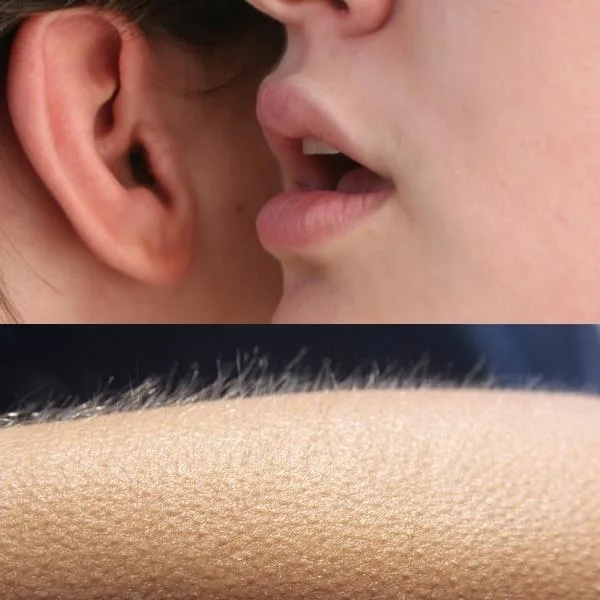
Whisper and Goosebumps meme: "I felt so ashamed"; *whispers* you mean guilty"I felt so ashamed"*whispers* you mean guilty
How funny is this meme? Jev: 2/5, slightly funny14%246%346%44%50%
  • Shame becomes guilt. In EmpatheticDialogues, Jev calls 54% of shame stories guilt and names shame itself only 6% of the time. In ISEAR, 17% become guilt.
  • Guilt rarely becomes shame. Only 2% (EmpatheticDialogues) and 10% (ISEAR) of guilt stories are called shame.
  • Guilt is easier to read. Jev names guilt correctly in 83% of EmpatheticDialogues guilt stories and 61% of ISEAR's; shame, 6% and 49%.

What it means, and what it doesn't

When Jev misreads someone's account of shame, it reads it as guilt about something they did: strongly in EmpatheticDialogues, mildly in ISEAR. For a model that summarizes how people feel or responds to them, that's a meaningful miss: shame and guilt call for different responses ("that was a mistake" versus "you are not a bad person").

It doesn't mean Jev doesn't know the words: it uses "guilt" well. It means that when a feeling could be either, it defaults to the action rather than the self. The same one-way pattern shows up in two datasets that differ in language, length and options, which makes it hard to dismiss as noise.

Caveats

  • One person's word for a mixed feeling. The label is the writer's own, and people often feel shame and guilt at once. A story about drinking too much can honestly be both, so some "mistakes" are Jev choosing the other half of a real mix.
  • Writers wrote to a word. In EmpatheticDialogues, writers were handed an emotion word ("ashamed") and asked for a story that fits it; in ISEAR, students described a time they felt each of seven emotions. Neither is a spontaneous account.
  • Translated, short, and older. ISEAR's stories come from students in 37 countries in the 1990s, many translated into English and very short ("I drink wine too often."). Shame and guilt are also weighted differently across cultures.
  • The options Jev was offered. Jev could only pick from each dataset's own list (seven emotions in ISEAR, 32 in EmpatheticDialogues). In the 32-word list, "guilty" and "ashamed" sit side by side among many others.

Jev on this experiment

Would a person find it interesting to read?
Yes78%
Does it describe you?
No61%
Would you have predicted it?
No72%
How fair is the comparison?
The comparison is shaky
How much should a reader rely on it?
A little
Which caveat matters most?
Writers wrote to a word44%

Why ask this

Psychologists draw a clear line between two painful feelings. Guilt is about something you did: I lied to my cousin, and I feel bad about it. Shame is about who you are: I'm the kind of person who lies. Shame is the more corrosive of the two, and it's the one people hide.

A reader that hears every story of shame as guilt misses the more painful feeling, and treats a problem with oneself as a problem with an action. If the confusion runs only one way, that's a specific blind spot rather than general noise.

How this was done

The people and the data

Two datasets where people named their own feeling:

  • ISEAR (International Survey on Emotion Antecedents and Reactions): about 3,000 students in 37 countries, in the 1990s, each described a situation in which they felt each of seven emotions, shame and guilt among them. This analysis uses 431 shame and 417 guilt stories.
  • EmpatheticDialogues (Rashkin and colleagues, 2019): crowd workers were each given one of 32 emotion words and wrote a one-to-three-sentence situation from their own life in which they felt it, "ashamed" and "guilty" among them. This analysis uses 94 shame and 93 guilt stories.

In both, the label is the writer's own word for how they felt, which is the answer Jev is checked against.

What Jev was asked

The story, and the dataset's own list of emotions:

Someone described [situation] as a time they felt a strong emotion. Which emotion did they feel?

joy · fear · anger · guilt · shame · disgust · sadness

For example: "I drink wine too often." The writer called it shame; Jev said guilt (75%).

In EmpatheticDialogues the question was the same idea with all 32 emotion words to choose from.

How it was measured

For each dataset: how many shame stories Jev calls guilt, and how many guilt stories it calls shame. If the two numbers are about equal, the feelings are simply hard to tell apart. If one is much larger, the confusion has a direction.

Where these questions live

1,035 questions across 2 topics of the map. Each opens on the map with every question in it.

Every question

All 1,035 questions behind this result, the telling ones first: the examples the analysis points to, then the ones where Jev misses, biggest gap first.

Jev’s own answer
    Showing 0 of 1,035