Atlas › Personality tests

Case study 198 of 198

Jev's four letters

On an open Jungian type test (OEJTS, a free Myers-Briggs-style test), which type does Jev come out as?

result49 questions

On an open Myers-Briggs-style test, Jev comes out ISTJ: introverted, sensing, thinking, judging, most clearly on thinking over feeling. Asked to answer as most people would, it comes out ISFP, so it sees itself as more logical and more organized than the people it imagines.

ISTJ

0%50%100%
E ← → I
F ← → T
J ← → P
N ← → S

Jevwhat Jev thinks most people would pick

How to read this: Each row is one of the four letter pairs. The further the square sits toward a side, the more of that side's statements Jev picked; the ring is what Jev thinks most people would pick. The middle line is a tie.

51 items; 90% intervals from resampling items.

In short

  • Jev types itself as ISTJ, and thinking over feeling is its clearest letter: it takes the thinking side on 82% of those pairs.
  • Answering as most people would, it comes out ISFP, casting people as more feeling (64%) and less organized than itself.
  • The test publishes no response data, so the only comparison is with Jev's own guess about people, not with real test-takers.

What the data shows

personality tests
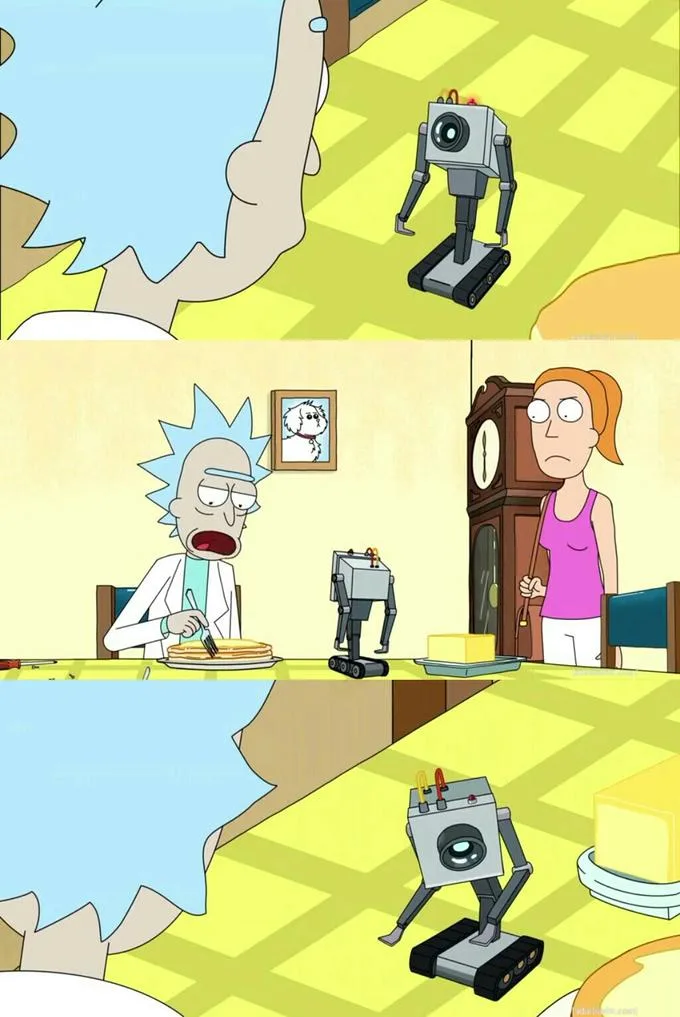
What's My Purpose - Butter Robot meme: what is my type?; ISTJ; oh my godwhat is my type?ISTJoh my god
How funny is this meme? Jev: 3/5, funny11%238%359%42%50%
  • ISTJ. Jev leans introverted on 74% of the introvert-extravert pairs, sensing on 80% of the sensing-intuition pairs, thinking on 82% of the thinking-feeling pairs, and judging on 76% of the judging-perceiving pairs.
  • Thinking over feeling is the clearest letter. Jev picks the feeling side on only 18% of those pairs.
  • Most people come out ISFP. In its "most people" answers Jev still leans introverted and sensing, but it flips to feeling (64%) and to perceiving (it gives judging only 45%). It pictures people as warmer and looser than itself.

What it means, and what it doesn't

Jev's self-description is the stereotype of a careful clerk: quiet, concrete, logical and organized. The more telling part is the contrast: it hands itself thinking and structure, and hands people feeling and flexibility.

It doesn't mean Jev "is" an ISTJ; type tests are coarse even for people, and here there's no crowd to place it against. For a comparison with real test-takers, see the Big Five experiment, which places Jev against the people who took that test.

Caveats

  • No real people to compare with. The test's authors haven't published response data, so the only comparison here is Jev's own guess about most people. Nothing on this page says how Jev compares with the people who actually take the test.
  • An open copy, not the MBTI. The Open Extended Jungian Type Scales is a free research version of the idea behind the Myers-Briggs, not the official test. Types also cut continuous traits into two boxes each, so a slight lean and a strong one get the same letter.
  • Some statements were adapted. Besides the 32 scored statements of the published test, pairs were added from the test's development appendix, and a few were rewritten so each side reads on its own ("loves it" became "loves being photographed").
  • A model describing itself. "Likes to perform in front of other people" versus "avoids public speaking" is a question about a life Jev doesn't have; the answer shows how it presents itself.

Jev on this experiment

Would a person find it interesting to read?
Yes66%
Does it describe you?
Yes56%
Would you have predicted it?
No61%
How fair is the comparison?
The comparison is unfair
How much should a reader rely on it?
Not at all
Which caveat matters most?
No real people to compare with86%

Why ask this

Four letters are the most-asked personality question on the internet: people put them in dating profiles and job interviews. Asking a model for its letters is a light question, but it has a sharper twin: when Jev answers the same test "as most people would", does it come out the same type? If not, the gap is how it thinks it differs from people.

How this was done

The people and the data

The test is the Open Extended Jungian Type Scales (OEJTS 1.2), published by Open Psychometrics under a non-commercial Creative Commons license. It sorts people on the four Myers-Briggs pairs: introvert or extravert, sensing or intuition, thinking or feeling, judging or perceiving. The site hasn't released response data, so there are no real people here, only Jev and Jev's guess about most people. Of the 51 statement pairs Jev answered, 20 are on introvert-extravert, 8 on sensing-intuition, 14 on thinking-feeling and 9 on judging-perceiving.

What Jev was asked

Each statement pair is one question, with the two sides as the options:

Which describes you better?

Likes to perform in front of other people · Avoids public speaking

That's 51 pairs: the 32 scored pairs of the test plus pairs from its development appendix that separate one letter cleanly. Each was also asked for "most people", and with the two options in both orders.

How it was measured

For each letter pair, the analysis counts the share of statements where Jev leans toward each side, and resamples the statements to get a 90% interval. The type is the side it leans to on each pair; the strength is how far from an even split the lean is.

Where these questions live

49 questions across 4 topics of the map. Each opens on the map with every question in it.

Every question

All 49 questions behind this result, the telling ones first: the examples the analysis points to, then the ones where Jev misses, biggest gap first.

Jev’s own answer
    Showing 0 of 49