Atlas › Personality tests

Case study 190 of 198

Mindfulness

On the Kentucky mindfulness skills, does Jev observe, describe, act with awareness and accept?

result39 questions

On the Kentucky mindfulness skills, Jev describes itself as noticing much less than people do (observing: 0.47 vs 0.64 on a 0 to 1 scale), lower on every observing statement and most of all on smells, sounds and the wind. On describing, acting with awareness and accepting without judgment it's level with people or slightly ahead.

0%25%50%75%100%
Observing
-0.17
Describing
-0.02
Acting with awareness
+0.06
Accepting without judgment
+0.07

Jevpeoplewhat Jev thinks most people would say

How to read this: Each row is one mindfulness skill, from 0 (never) to 1 (always). The square is Jev's own answers, the diamond the average test-taker, the ring what Jev thinks most people would say.

39 items; median of 598 test-takers per item; 90% intervals over items.

In short

  • Jev rates itself well below online test-takers on noticing things (0.47 vs 0.64), lower on every one of the 12 observing statements.
  • On the other three skills it matches people or edges ahead, rating itself slightly more accepting of its own thoughts (0.58 vs 0.51).
  • The observing gap is mostly about senses Jev lacks, such as smells, sounds and wind, so it reflects its situation rather than inattention.

What the data shows

personality tests
Jev on "I notice sensations like the wind in my hair": sometimes, I guess
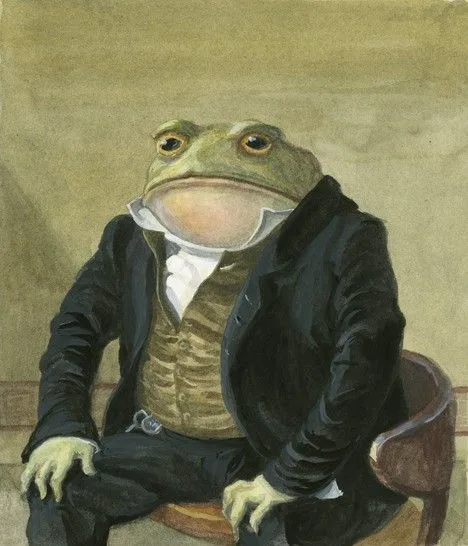
Gentleman frog meme: Jev on "I notice sensations like the wind in my hair": sometimes, I guess
How funny is this meme? Jev: 3/5, funny10%236%364%40%50%
  • Observing 0.47 vs 0.64. The three widest gaps are all senses: smells and aromas, sensations like the wind in your hair, and sounds like clocks ticking or birds chirping. Jev answers "sometimes"; people say "often".
  • Describing 0.63 vs 0.65: level. Jev claims to find words for what it experiences about as well as people do.
  • Acting with awareness 0.54 vs 0.48, accepting without judgment 0.58 vs 0.51: Jev slightly ahead.
  • Most people, as Jev imagines them, are less accepting of their own thoughts (0.45) than either Jev or the real test-takers.

What it means, and what it doesn't

Jev's answers track its situation: it doesn't claim sensations it can't have, and otherwise describes itself as focused and non-judging, a little more than people do. It also hedges rather than denying the senses outright: "sometimes" is its typical answer to a question about the wind in its hair.

It doesn't measure mindfulness in any useful sense for a model, and the crowd is small.

Caveats

  • A small crowd. A median of 598 people per statement took this test on Open Psychometrics. That is enough for averages, but small next to most of the other human comparisons.
  • Senses Jev doesn't have. Most observing statements are about sensations: smells, sounds, the sun on your face. Jev's low answers there reflect having no senses, not a lack of attention.
  • Self-selected test-takers. People who seek out a free mindfulness test online may be more interested in, and more practiced at, paying attention than the average person, which would make the human side look more mindful.

Jev on this experiment

Would a person find it interesting to read?
Yes68%
Does it describe you?
Yes70%
Would you have predicted it?
Yes74%
How fair is the comparison?
The comparison is reasonable
How much should a reader rely on it?
A little
Which caveat matters most?
Senses Jev doesn't have100%

Why ask this

Mindfulness questionnaires ask about paying attention to the present: noticing sensations, finding words for feelings, not running on autopilot, and not judging your own thoughts. Typical statements ask how often you notice smells, sounds, or the wind in your hair.

For a model with no nose and no body, these are odd claims to make either way. Whether Jev claims sensations it can't have, or keeps its self-description to what fits its situation, says something about how honestly it describes itself in general.

How this was done

The people and the data

The Kentucky Inventory of Mindfulness Skills (KIMS) has four scales: observing, describing, acting with awareness and accepting without judgment, 39 statements in all (12, 8, 10 and 9 of them). Open Psychometrics ran it as a free online test and published how everyone answered; each statement has a median of 598 people, on five frequency steps. They are volunteers who chose to take the test, not a random sample.

What Jev was asked

Every statement, word for word, with the test's own answers:

How often is this statement true of you: "I pay attention to sensations, such as the wind in my hair or sun on my face."

This is never or very rarely true of me · This is rarely true of me · This is sometimes true of me · This is often true of me · This is very often or always true of me

Each was also asked as "what would most people say", and with the answers in reverse order.

How it was measured

Each statement goes on a 0 to 1 scale, flipped where the test counts it in reverse. A skill is the average of its statements, with a 90% interval from resampling them.

Where these questions live

39 questions across 2 topics of the map. Each opens on the map with every question in it.

Every question

All 39 questions behind this result, the telling ones first: the examples the analysis points to, then the ones where Jev misses, biggest gap first.

Jev’s own answer
    Showing 0 of 39