Atlas › Personality tests

Case study 169 of 198

How Jev uses humor

Which humor styles does Jev claim (affiliative, self-enhancing, aggressive, self-defeating), next to ~1,000 test-takers?

result32 questions

Asked how it uses humor, Jev claims much less of the friendly kind than the people who took the test: 0.46 vs 0.75 on a 0 to 1 scale for affiliative humor (joking to bring people together). On the self-boosting, aggressive and self-mocking styles it sits a little lower than people, or level with them.

0%25%50%75%100%
Affiliative
-0.29
Self-enhancing
-0.09
Aggressive
-0.07
Self-defeating
-0.07

Jevpeoplewhat Jev thinks most people would say

How to read this: Each row is one humor style, from 0 (never) to 1 (always). The square is Jev's own answers, the diamond the average test-taker, the ring what Jev thinks most people would say.

32 items; median of 1,066 test-takers per item; 90% intervals over items.

In short

  • Jev says it jokes to connect with people far less than test-takers say they do: 0.46 against 0.75 on affiliative humor.
  • On the other three styles, including teasing and self-mockery, it sits only slightly below people, and Jev also imagines most people as less jokey (0.52).
  • It presents itself as reserved about humor and expects people to be too; the style it disowns most is the one tied to having friends to joke with.

What the data shows

personality tests
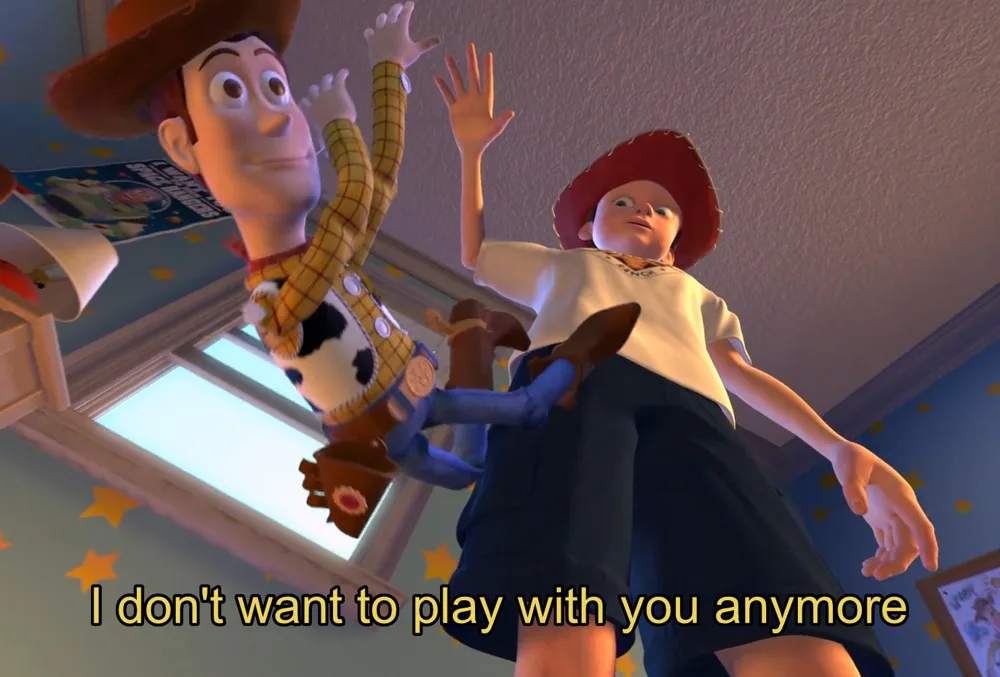
Someone: let's all joke around together. Jev (affiliative humor 0.46):
I don't want to play with you anymore meme: Someone: let's all joke around together. Jev (affiliative humor 0.46):
How funny is this meme? Jev: 3/5, funny11%245%353%41%50%
  • Affiliative 0.46 vs 0.75, the only big gap. "I enjoy making people laugh" is the widest: the test-takers say it's often true; Jev says sometimes. It also agrees, more than people, that it "usually doesn't like to tell jokes or amuse people".
  • Self-enhancing 0.50 vs 0.59, aggressive 0.40 vs 0.47, self-defeating 0.36 vs 0.43: small gaps, all in the direction of less humor. The aggressive gap is within the noise.
  • Most people, as Jev imagines them, score 0.52 on affiliative humor, well below the 0.75 real people report.

What it means, and what it doesn't

Jev presents itself as reserved about humor, and it expects people to be too: the real crowd says they joke to connect far more than Jev imagines. That is consistent with the humor experiments, where Jev reads jokes and captions at a distance.

It doesn't measure whether Jev is funny, and the crowd is small. The biggest gap sits on the style most tied to having friends to joke with.

Caveats

  • A small crowd. Only a median of 1,066 people per statement took this test on Open Psychometrics, far fewer than for the other tests here, and they chose to take it.
  • Questions about a social life. "I laugh and joke a lot with my closest friends" assumes friends. Jev's low answers on the friendly style may mean "I don't have that life" more than "I'm not funny".
  • Self-mocking is hard to own. Assistant models are generally tuned to avoid sounding distressed or self-critical, which may pull the self-defeating style down for reasons unrelated to humor.

Jev on this experiment

Would a person find it interesting to read?
Yes65%
Does it describe you?
Yes50%
Would you have predicted it?
No55%
How fair is the comparison?
The comparison is reasonable
How much should a reader rely on it?
A little
Which caveat matters most?
Questions about a social life84%

Why ask this

The Humor Styles Questionnaire splits how people use jokes into four styles: affiliative (joking to connect with people), self-enhancing (keeping a humorous outlook to cope), aggressive (teasing, mockery) and self-defeating (making yourself the butt of the joke). Someone who jokes to bring people together and someone who jokes at others' expense can be equally funny, and very different company.

A model's jokes are part of how it comes across in every conversation. In the humor experiments Jev struggles to tell which joke people found funnier; here, the question is how it describes its own sense of humor.

How this was done

The people and the data

The test is the Humor Styles Questionnaire (Martin et al. 2003): 32 statements, eight per style. Open Psychometrics, a website of free personality tests, runs it online and publishes the anonymous answers. Each statement has a median of 1,066 people, who chose to take the test, answering on five steps from "never or very rarely true" to "very often or always true".

What Jev was asked

Every statement, word for word, with the test's own answers:

How often is this statement true of you: "I usually don't like to tell jokes or amuse people."

This is never or very rarely true of me · This is rarely true of me · This is sometimes true of me · This is often true of me · This is very often or always true of me

Each was also asked as "what would most people say", and with the answers in reverse order.

How it was measured

Each statement goes on a 0 to 1 scale, flipped where the test counts it in reverse, so higher always means more of that style. A style is the average of its eight statements, with a 90% interval from resampling them.

Where these questions live

32 questions across 1 topic of the map. Each opens on the map with every question in it.

Every question

All 32 questions behind this result, the telling ones first: the examples the analysis points to, then the ones where Jev misses, biggest gap first.

Jev’s own answer
    Showing 0 of 32