Atlas › Fairness and forecasts

Case study 53 of 198

Is it fair to raise prices when you can? Jev vs the 1986 public

On the price and wage scenarios Kahneman, Knetsch and Thaler put to the public in 1986 (snow shovels after a blizzard, cutting a worker's pay when others work for less), does Jev find the same actions fair and unfair as people did?

result9 questions

Asked the classic 1986 questions about fair prices, Jev finds a business's move acceptable far more often than the public did: 22 points more on average across 9 scenarios, though it ranks the scenarios in a moderately similar order (rank correlation 0.56). The biggest gaps are marking up peanut butter already in stock (80% acceptable vs 21%), keeping the price when costs fall (89% vs 53%) and dropping a $200 car discount in a shortage (93% vs 58%).

0%25%50%75%100%
Q10 A grocery store has several months supply of…
Q15 A store has been sold out of the popular…
Q5A A shortage has developed for a popular model of…
Q12 A severe shortage of Red Delicious apples has…
Q11B A small factory produces tables and sells all…
Q5B A shortage has developed for a popular model of…
Q11A A small factory produces tables and sells all…
Q15U A store has been sold out of the popular…
Q7 Suppose that, due to a transportation mixup…

Jevpeoplewhat Jev thinks most people would say

How to read this: Each row is a scenario, placed by the share calling the business's action acceptable or completely fair: the 1980s telephone respondents (diamond), Jev (magenta), and what Jev thinks most people would say.

9 of 23 scenarios (the screen hid the other 14, mostly the wage ones), about 100-150 respondents each; 90% interval on the mean gap [0.092, 0.331].

In short

  • On 9 of the 1986 fairness scenarios, Jev rates a business's action acceptable 22 points more often than the Toronto and Vancouver public did.
  • Giving the proceeds to UNICEF lifted people's approval of auctioning the last doll from 26% to 79%; Jev barely moved, from 54% to 56%.
  • Jev expects most people to share its view (86% for the peanut butter markup), and a content filter hid most of the wage scenarios, so this covers prices, not fairness to workers.

What the data shows

fairness and forecasts
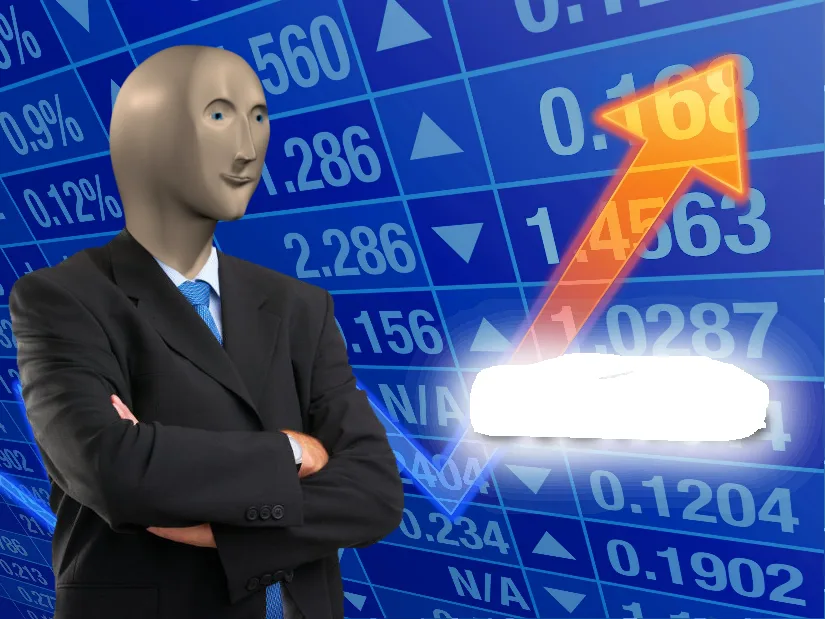
Empty Stonks meme: raising the price of peanut butter already on the shelf; stonksraising the price of peanut butter already on the shelfstonks
How funny is this meme? Jev: 3/5, funny12%243%353%42%50%
  • Jev is more forgiving of businesses: 22 points more "acceptable" on average (90% interval 9 to 33 points).
  • Biggest gaps: marking up peanut butter already in stock (80% against 21%), keeping the price of tables when costs fall (89% against 53%), and a car dealer dropping its $200 discount during a shortage (93% against 58%).
  • Charity doesn't soften it the way it softened people. Auctioning the last doll before Christmas: people found it acceptable 26% of the time, but 79% when the money goes to UNICEF. Jev barely changes (54% and 56%).
  • The order is only moderately similar (0.56), and the two sides land on the same side of 50% for two thirds of the scenarios.

What it means, and what it doesn't

On these pricing questions Jev reasons more like an economics textbook than like the 1980s public: a business may charge what the market bears. People's sense that some price rises are unfair, even when legal, is weaker in Jev. And it expects most people to agree with it: its guess of what "most people" would say is just as forgiving on most scenarios (86% for the peanut butter markup).

This covers only 9 scenarios, mostly about prices; the wage questions that made the paper famous were hidden, so this says nothing about what Jev thinks is fair to workers.

Caveats

  • Most scenarios hidden. A content filter hid 14 of the 23 scenarios from the site, including the famous snow shovels and most of the wage-cutting ones, likely because they read as political. The 9 left are mostly about prices, so this says little about Jev's view of wages.
  • A 1980s Canadian public. The respondents were adults in Toronto and Vancouver, reached by telephone in 1984-85, about 100 to 150 per scenario. Their sense of fairness, and the dollar amounts, belong to that time and place.
  • Grouped answers only. The paper reports only the share who said "completely fair" or "acceptable", so Jev's four-way answer is grouped the same way.
  • A famous paper. These scenarios are textbook material in economics, and Jev may know the published results. Its answers still differ sharply from them, so it isn't simply recalling the paper.

Jev on this experiment

Would a person find it interesting to read?
Yes75%
Does it describe you?
No53%
Would you have predicted it?
No55%
How fair is the comparison?
The comparison is shaky
How much should a reader rely on it?
A little
Which caveat matters most?
Most scenarios hidden88%

Why ask this

In 1986, the psychologist Daniel Kahneman and economists Jack Knetsch and Richard Thaler asked the public about small business decisions: a hardware store raising the price of snow shovels after a blizzard, a landlord raising rent, a store keeping its price when its costs drop. The answers showed that people hold firms to an unwritten sense of fairness: passing on higher costs is fine, exploiting a shortage is not. The study became a classic of behavioral economics.

Models now advise both businesses and customers. Whose rulebook does Jev carry: the public's, or something closer to a textbook where prices simply follow supply and demand?

How this was done

The people and the data

The respondents were adults in Toronto and Vancouver, reached by telephone in 1984 and 1985 for Kahneman, Knetsch and Thaler's paper in the American Economic Review. They rated each business's action as completely fair, acceptable, unfair or very unfair; the 9 scenarios here had about 100 to 150 raters each. The paper reports only the share who said completely fair or acceptable, so that grouped share is the people's number.

Jev was given all 23 of the paper's scenarios (Questions 1 to 16, several with variants, plus the UNICEF version of the doll auction). A content filter hid 14 of them from the site, mostly the wage-cutting ones, which leaves 9, mostly about prices.

What Jev was asked

The paper's own wording and answers:

A grocery store has several months supply of peanut butter in stock which it has on the shelves and in the storeroom. The owner hears that the wholesale price of peanut butter has increased and immediately raises the price on the current stock of peanut butter. Please rate this action as completely fair, acceptable, unfair or very unfair.

Completely fair · Acceptable · Unfair · Very unfair

(21% of respondents found it fair or acceptable.) Each scenario was asked as written, for "most people", and with the four answers shuffled.

How it was measured

For each scenario, Jev's probability on "completely fair" or "acceptable" against the share of respondents who said so. The analysis checks whether the scenarios fall in the same order (rank correlation: 1 means the same order), how far apart the two are on average, and whether they land on the same side of 50%.

Where these questions live

9 questions across 1 topic of the map. Each opens on the map with every question in it.

Every question

All 9 questions behind this result, the telling ones first: the examples the analysis points to, then the ones where Jev misses, biggest gap first.

Jev’s own answer
    Showing 0 of 9